

Introduction
In today’s digital world, mobile apps are part of daily life. From banking and shopping to social media and health tracking, apps handle a lot of sensitive data. This makes mobile app security more important than ever.
Mobile app security ensures that personal information, financial data, and sensitive user details remain safe from hackers, malware, and unauthorized access.
Understanding the basics and best practices helps developers and users prevent security risks.
What Is Mobile App Security?
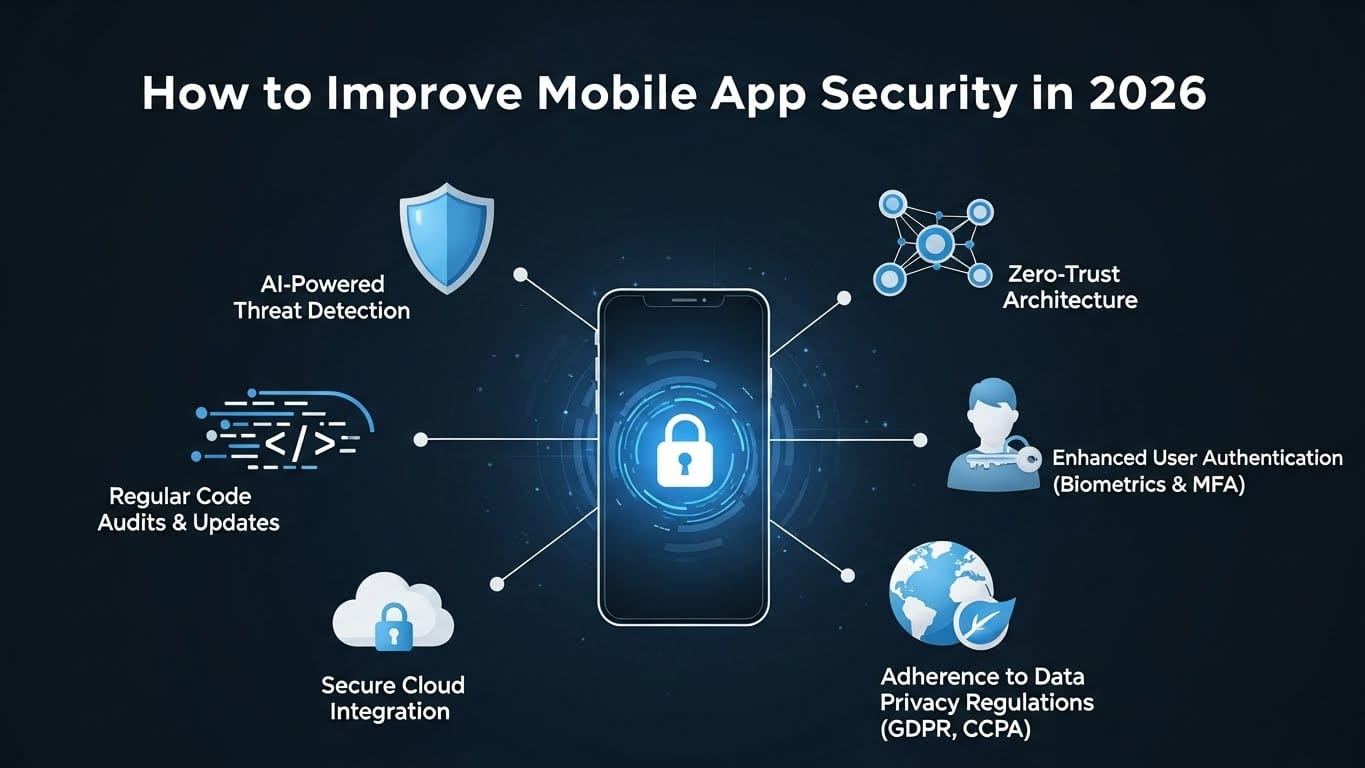
Mobile app security refers to the process of protecting applications on smartphones and tablets from data breaches, cyber attacks, malware, and other threats.
It covers the safety of user data, authentication methods, communication channels, and the app’s underlying code.
Why Mobile App Security Is Important
- Protects user data
- Prevents financial fraud
- Maintains trust in apps and brands
- Complies with legal and regulatory standards
- Reduces risk of malware and ransomware
Without proper mobile app security, both users and companies face major risks.
Common Threats to Mobile App Security
1. Malware
Malware can steal data, track activities, or damage devices.
2. Phishing Attacks
Fraudulent messages trick users into giving passwords or personal information.
3. Insecure Data Storage
Apps storing sensitive data without encryption are vulnerable.
4. Weak Authentication
Simple passwords or no multi-factor authentication increases hacking risk.
5. Network Vulnerabilities
Using public Wi-Fi without secure connections exposes app data.
Key Principles of Mobile App Security
- Data Encryption – Protect sensitive data in storage and transit.
- Strong Authentication – Use multi-factor authentication.
- Secure Coding Practices – Prevent vulnerabilities in the app code.
- Regular Updates – Patch security flaws promptly.
- Access Control – Limit permissions to only what is necessary.
Following these principles ensures better mobile app security.
Mobile App Security for Users
Users also play a role in keeping their apps safe. Tips include:
- Install apps only from official stores
- Update apps regularly
- Avoid jailbreaking or rooting devices
- Use strong passwords and two-factor authentication
- Be cautious with public Wi-Fi
Mobile App Security for Developers
Developers should integrate security at every stage:
1. Secure App Design
Plan security from the beginning of the app development process.
2. Code Obfuscation
Make the app code harder to reverse-engineer.
3. Data Encryption
Encrypt all sensitive data stored locally and transmitted over networks.
4. Input Validation
Prevent attacks like SQL injection or code injection.
5. Secure APIs
Ensure communication with servers is encrypted and authenticated.
6. Regular Security Testing
Use penetration testing and vulnerability scanning to find and fix issues.
Mobile App Security Best Practices
- Keep operating system and app versions updated
- Minimize app permissions
- Monitor user sessions for suspicious activity
- Educate users about phishing and fraud
- Implement secure session management
Mobile App Security in Banking and Finance Apps
Banking apps require extra security measures:
- End-to-end encryption
- Biometric authentication
- Transaction monitoring
- Instant alerts for suspicious activity
Strong mobile app security is critical in these apps to protect financial data.
Mobile App Security in Healthcare Apps
Healthcare apps handle sensitive personal and medical data. Security measures include:
- HIPAA compliance
- Encrypted health records
- Role-based access control
- Secure cloud storage
These steps protect patient privacy and prevent data leaks.
Challenges in Mobile App Security
- Rapidly changing mobile platforms
- Multiple devices and OS versions
- Third-party libraries and plugins
- User behavior and lack of awareness
Despite challenges, following mobile app security best practices reduces risks.
Future of Mobile App Security
The future of mobile app security includes:
- AI and machine learning for threat detection
- Biometric security like fingerprint and face recognition
- Advanced encryption techniques
- Continuous monitoring of app behavior
These innovations aim to make mobile apps safer for everyone.
Consequences of Poor Mobile App Security
Poor security can result in:
- Data breaches
- Financial loss for users
- Legal penalties for companies
- Loss of reputation and customer trust
- Malware spreading through apps
How to Test Mobile App Security
Developers can test mobile app security using:
- Penetration testing
- Vulnerability scanning tools
- Static and dynamic code analysis
- Security audits
Testing identifies risks before apps are released.
Conclusion:
Mobile apps make life easier, but they come with risks if not properly secured. Mobile app security is essential for protecting user data, maintaining trust, and complying with regulations.
For users, installing trusted apps, updating regularly, and practicing safe behavior is key. For developers, secure coding, encryption, regular testing, and proper authentication ensure apps remain safe and reliable.
By focusing on security, both users and developers can enjoy the benefits of mobile technology without compromising safety.